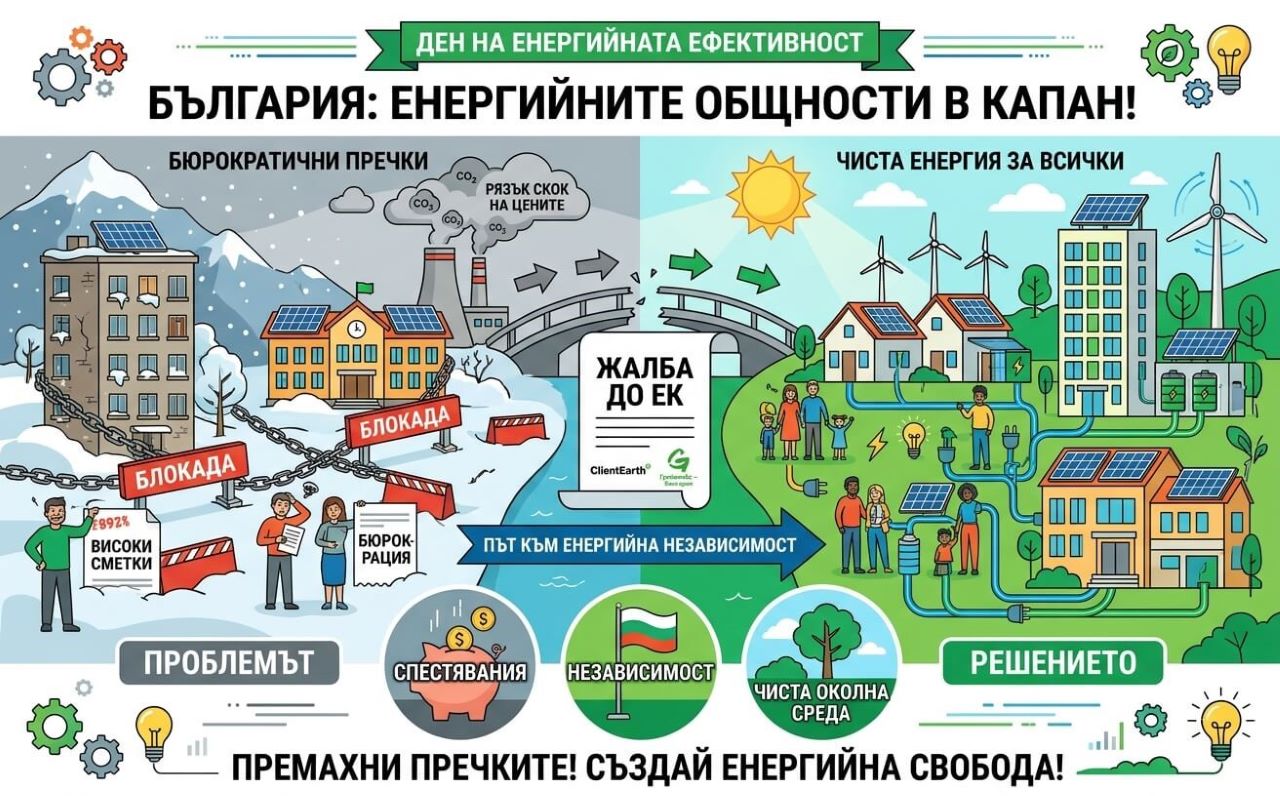
The international environmental law organisation ClientEarth has filed an official complaint with the European Commission against the Bulgarian government for failing to comply with European requirements to support energy communities. The initiative is also supported by Greenpeace Bulgaria. Similar complaints have been made against the governments of Poland, Hungary and Croatia.
What are energy communities and what is their potential?
Energy communities allow citizens, local authorities and small businesses to produce and share renewable energy together — for example, by installing solar panels on the roofs of schools, public or residential buildings. This is a proven tool for increasing energy efficiency and reducing monthly bills.
According to data from the European Commission, households in energy communities combining solar and wind energy can save up to €930 per year.
Local energy production reduces dependence on expensive and unstable fossil fuels such as natural gas. In combination with balancing technologies, these communities make the national grid more resilient to price shocks.
The problem in Bulgaria
Despite the fact that the law in Bulgaria now formally recognises the existence of energy communities, cumbersome administrative procedures and the lack of detailed regulations make their practical creation extremely difficult.
‘In Bulgaria, energy communities exist thanks to great enthusiasm and perseverance. The law recognises them, but the complex procedures and incomplete regulatory framework continue to prevent citizens from producing and sharing their own clean energy,” says Balin Balinov from Greenpeace Bulgaria. He reminds us that as early as 2023, A solar power plant was built on the roof of the presidential palace, providing around 30% of the building’s energy needs, and he calls for this opportunity to be made available to all citizens.
Environmentalists and legal experts are calling for urgent changes, clear rules and political will to transform energy efficiency and community energy from theory to a functioning solution for Bulgarian households.
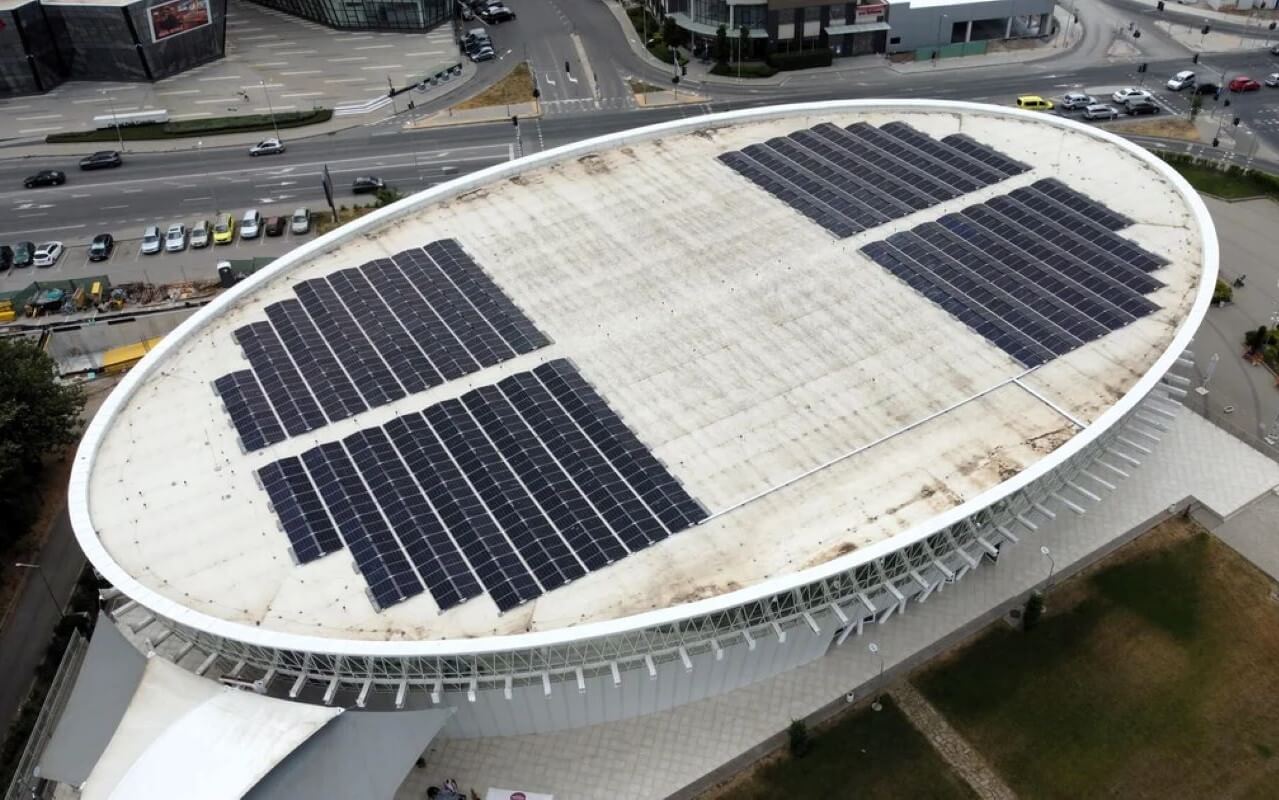
A solar installation on the building of the swimming pool in the district of Slaviiev v Burgas – part of the installations of the first energy community in the city.
Photo: Greenpeace Bulgaria